Excavation · 5 minute read
Tight-access excavation in Newcastle: what to measure before quoting
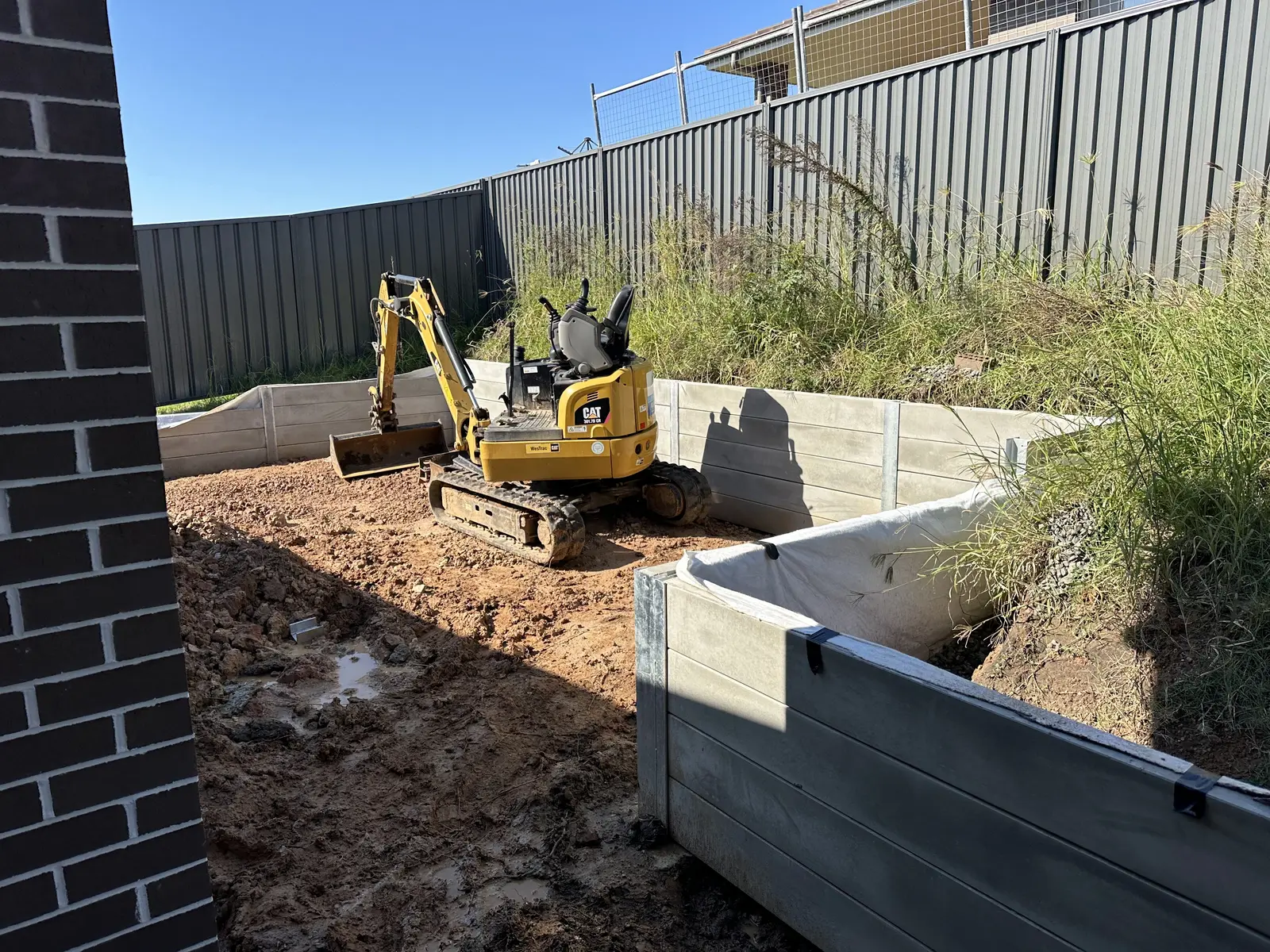
Compact machinery can open up residential work that would otherwise be completed by hand, but machine width is only one part of access. Turns, height, ground strength, spoil routes and delivery space all matter.
Measure the complete path to the work area
Measure the narrowest clear width from the street or driveway to the excavation—not just the gate. Check downpipes, taps, meters, hot-water units, eaves, retaining edges, steps and tight corners where the machine needs room to turn.
Height also matters when passing under carports, balconies, clotheslines or tree branches. Photos taken from the street toward the work area, and then back toward the street, make the route much easier to assess.
Plan how material will move in both directions
Excavation creates spoil, and many jobs also need aggregate, drainage rock, concrete, sleepers, blocks or soil brought back in. The machine may fit while a loaded barrow, mini dumper or removal method does not.
A clear quote should explain how material is expected to move, where it can be stockpiled and whether loading can happen on private property or requires a different arrangement.
- Approximate volume to excavate
- Stockpile space inside the property
- Distance from the work area to truck access
- Protection needed for paths, lawns and finished surfaces
Know what is under and around the excavation
Service plans, visible meters and site history help identify likely pipes and cables, but they do not show every private service or undocumented alteration. The first stage may require careful exposure before full excavation continues.
Existing walls, footings, tree roots and rock can also change productivity. These risks should be discussed in the scope so the allowance and process are understood before work begins.
When hand work still makes sense
The smallest practical machine is not automatically the best answer. Hand excavation may still be required near services, finished structures, fragile surfaces or sections with no safe machine position.
The most efficient plan often combines compact machinery for bulk work with controlled hand work for final trimming and sensitive areas. SJB Civil assesses both during the site visit rather than forcing one method onto the entire job.
Quick checklist
What to send with your enquiry
- Narrowest width and lowest overhead clearance
- Photos of gates, corners, steps and surface changes
- Distance from the work area to truck access
- Known pipes, cables, tanks or irrigation
- What must be protected and reinstated
Need advice for the actual site?
This guide is general information. Ground conditions, access, loads, services, drainage outlets and approval requirements are specific to each property. SJB Civil can inspect the site and define the practical next step in writing.