
Drainage · 6 minute read
Backyard drainage in Lake Macquarie: finding the cause before digging
A wet backyard can come from surface runoff, low finished levels, seepage, roof water, a blocked system or water arriving from uphill. Different causes need different fixes, so the first step is understanding when and where the water appears.
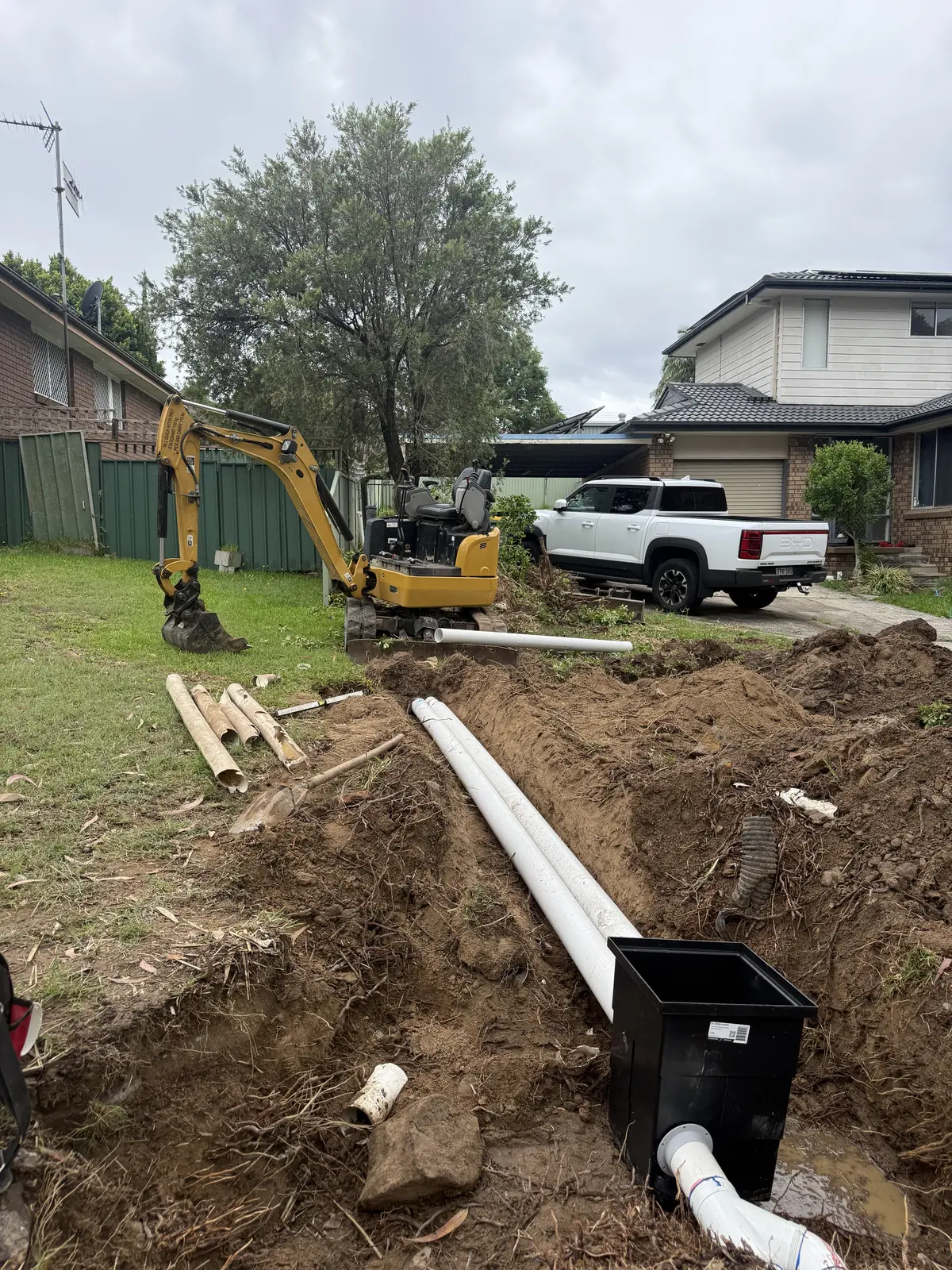
Watch the site during and after rain
Photos and short videos during rain often explain more than a dry inspection. Record where water enters, the direction it travels, where it ponds and how long the ground stays wet after rainfall stops.
Also note whether the problem occurs after light rain, only after prolonged weather or when neighbouring and uphill areas discharge at the same time. This helps distinguish a local low spot from a larger catchment issue.
Surface water and groundwater need different thinking
Surface drainage manages water moving across paving, soil and lawn. It may involve reshaping levels, grated drains, pits or defined flow paths. Subsoil drainage manages water within the ground or behind structures and may involve free-draining material and perforated pipe.
One system cannot always replace the other. An ag line buried in a lawn will not automatically capture fast surface runoff, while a surface pit may not relieve persistent seepage behind a retaining wall.
- Where the water starts
- Whether it moves over or through the ground
- The fall available to a suitable outlet
- How new levels affect neighbours and buildings
The outlet is as important as the drain
Collecting water is only useful when there is an appropriate place for it to discharge. The proposed outlet, pipe route, available fall and any connection requirements should be established before trenches are installed.
Where licensed plumbing, hydraulic advice or council input is required, that responsibility should be identified in the scope. SJB Civil can coordinate the earthworks and landscape construction around the approved drainage solution.
Rebuild the finished surface around the solution
Drainage works often fail visually when the pipe is treated as the whole project. Lawn, garden edging, paving transitions and soil levels still need to guide water and remain practical to maintain.
For this reason, drainage is often best planned as part of the broader landscape. The finished area should look intentional while keeping inspection points and future maintenance accessible.
Quick checklist
What to send with your enquiry
- Rain-time photos or videos
- How long the area remains wet
- Known roof-water and stormwater routes
- High and low points across the yard
- Nearby walls, buildings and neighbouring land
Need advice for the actual site?
This guide is general information. Ground conditions, access, loads, services, drainage outlets and approval requirements are specific to each property. SJB Civil can inspect the site and define the practical next step in writing.